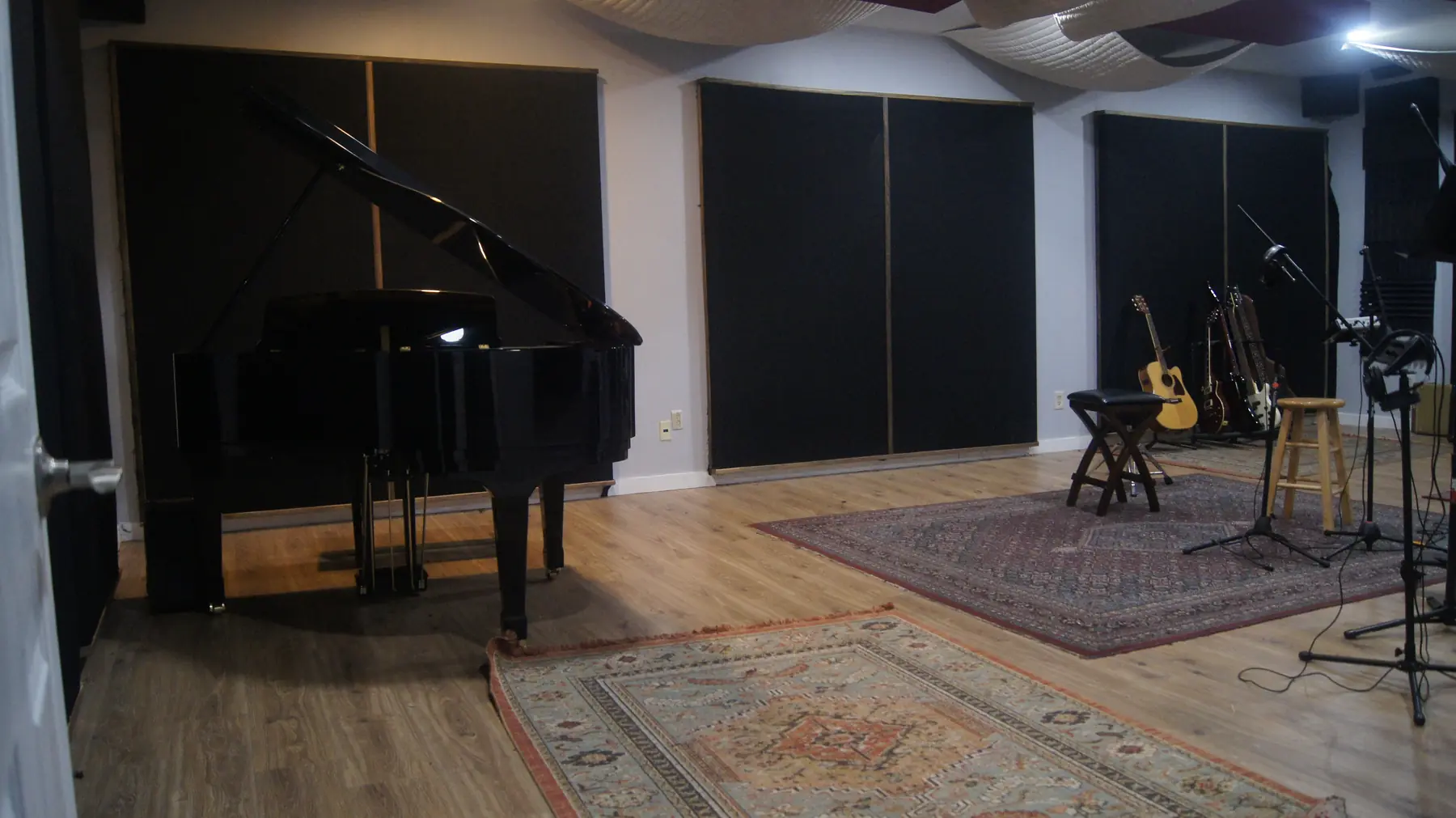
The live room is part of the instrument
Studio A’s approximately 570-square-foot live room gives performers and engineers room to decide how much space belongs in the sound. Moving a source, microphone, or gobo can change depth and tone before an equalizer is touched.
Isolation and interaction are both creative choices
Gobos can reduce spill and reshape reflections, but total separation is not always the goal. A full band may perform better when the players can see and feel one another. The session plan should protect that interaction while giving the mix enough control.
The control room supports faster decisions
The approximately 400-square-foot control room combines acoustic treatment, calibrated monitoring, nearfields, and a hybrid analog/digital signal path. The point is not to display equipment. It is to hear choices clearly enough to commit with confidence.
Instruments that already belong to the room
The in-studio DW drum kit and baby grand piano let artists use instruments that have already been heard and positioned in the space. Advance coordination still matters: tuning, arrangement, microphone plan, and player preference shape the result.
A flexible path beats a fixed recipe
API, Neve, Focusrite, Avalon, Empirical Labs, Shadow Hills, Antelope, and other tools give the team multiple ways to shape a source. The best chain is the one that supports the performance and the destination—not the longest list of brand names.
Hear the room in context
The listening deck on the Studio A page includes official or artist-approved 30-second previews of work completed at EMP across different artists and production approaches. Book a focused session or start a custom project when you are ready to discuss your own work.